
Small Business Automation in 2026: Start With the Work You Repeat
The best automation opportunities are often hidden in repetitive everyday tasks, from moving form data to sending follow-ups and updating internal systems.
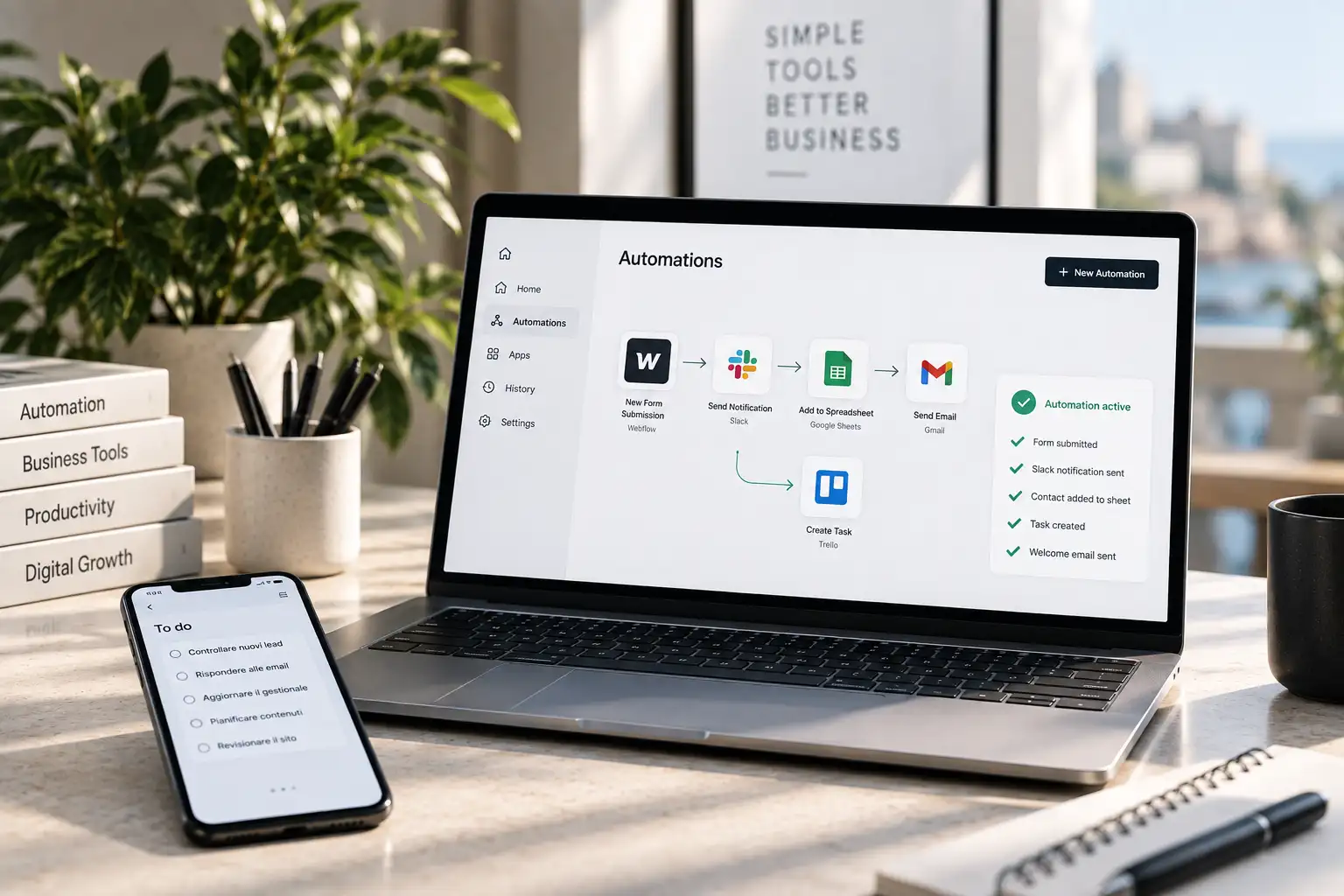
Automation can sound like a large transformation project, but for small businesses the most useful starting point is often much simpler: identify work that people repeat manually every day.
Look for repeated transfers of information
Zapier's 2026 guide highlights common patterns such as copying form submissions into spreadsheets, sending follow-up emails and updating CRM records. These tasks are predictable, repetitive and easy to overlook because teams become accustomed to doing them manually.
Automating them can reduce administrative effort and, just as importantly, reduce the chance that a lead or task is forgotten.
Do not automate a broken process
Before connecting tools, define what should happen, who owns each step and what exceptions require human judgement. Automation works best when the underlying process is already understandable.
Start small and measure
A useful first workflow might connect a website form to a CRM, create a project task and trigger an acknowledgement email. Once that process is reliable, additional steps can be added.
For a growing business, the goal is not to automate everything. It is to remove low-value repetition so people can spend more time on work that requires judgement, relationships and creativity.
For connected workflows and custom systems, explore web app and digital platform development.
Source: Zapier, The best automation software for small business in 2026.